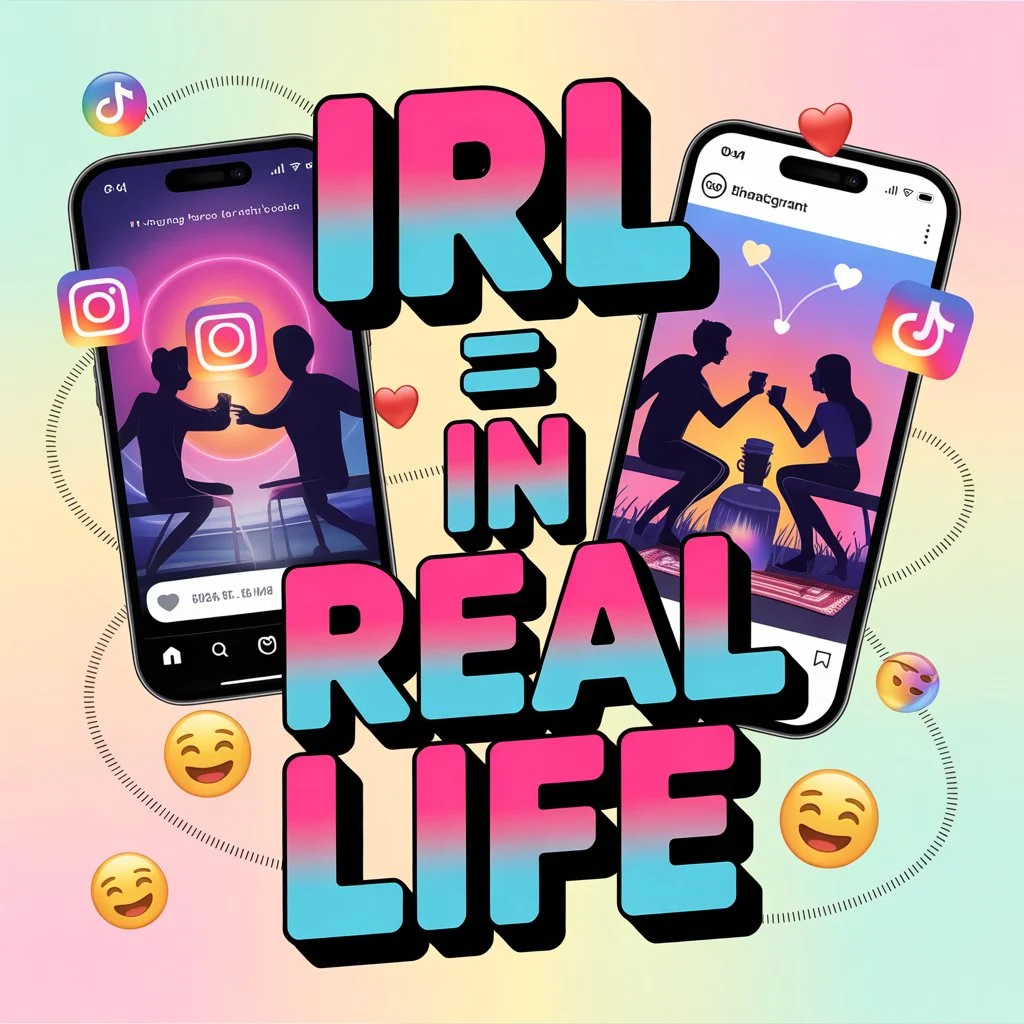
If you’ve spent any time scrolling through social media, chatting in online forums, or texting with friends, you’ve likely encountered the term “IRL.” So, what does IRL mean?
Simply put, “IRL” stands for “In Real Life,” and it’s used to differentiate between online interactions and those that take place in the physical world. Whether you’re talking about meeting someone face-to-face or contrasting digital experiences with reality, IRL is a quick and easy shorthand.
People often search for “IRL” to understand its widespread use, particularly how it has evolved in the digital age. This article will dive into the meaning of IRL, how it’s used, and its cultural impact on modern communication. By the end, you’ll not only know what “IRL” means but also why it’s such an important part of online conversations today.
IRL – Quick Meaning
Definition:
“IRL” stands for “In Real Life,” and is often used in conversations to distinguish between things that happen online or in a virtual space and things that happen physically in the real world.
Quick Breakdown:
- IRL: In Real Life
- Usage: Used when contrasting digital experiences with physical ones, or when referring to someone or something in the physical world.
Examples:
- “I’ve seen you online, but I can’t wait to meet you IRL.”
- “That concert was amazing, but the live performance IRL was something else!”
Origin & Background
The term “IRL” has its roots in the early days of the internet, particularly in chat rooms and online forums, where people would often interact in virtual spaces. As online communities grew, so did the need to distinguish between these virtual interactions and the physical world. “IRL” became shorthand for this distinction.
The cultural impact of “IRL” grew alongside the rise of social media platforms and instant messaging apps, where virtual connections were constantly being made. In many ways, “IRL” reflects the divide that technology creates between our online and offline lives. It serves as a reminder that, while we live much of our lives in digital spaces, we still maintain physical relationships and experiences.
As social media platforms such as Facebook, Twitter, and Instagram exploded in popularity, the term evolved, becoming even more widespread. TikTok and Snapchat also brought “IRL” into more playful contexts, especially as younger generations began exploring what it meant to “meet” someone in person versus online. The phrase itself continues to be a core part of digital communication, symbolizing a growing awareness of how our digital lives differ from our physical ones.
Real-Life Conversations
Now let’s dive into some realistic, relatable examples of how “IRL” is used in everyday conversations. These examples highlight the different ways people incorporate this term into their digital chats, whether it’s on WhatsApp, Instagram, or TikTok.
Example 1: WhatsApp Group Chat
- A: “I can’t believe we’ve been chatting for so long and never actually met!”
- B: “Yeah, I know! We should plan something IRL soon.”
- A: “Definitely! Let’s make it happen this weekend!”
Example 2: Instagram DM
- A: “You’re so funny on your stories, but I bet you’re even funnier IRL!”
- B: “Haha, thanks! I try to be, but the jokes come out better in person.”
Example 3: TikTok Comments
- Person A: “That dance looks so fun!”
- Person B: “It is! I can’t wait to do this IRL with my friends.”
Example 4: Text Message
- A: “Do you think it’ll be awkward when we meet?”
- B: “Nah, it’ll be fine! We’ve been talking for so long, it’ll just be nice to hang out IRL.”
These examples show how “IRL” is used to convey a shift from the digital realm to the real world. It serves as a way to acknowledge the contrast between virtual and in-person experiences.
Emotional & Psychological Meaning
On an emotional and psychological level, “IRL” reflects the deep connection we feel to the physical world despite spending so much of our time online. It’s often used to express excitement, anticipation, or even a little nervousness about transitioning from a digital interaction to an in-person meeting.
For example, if you’ve been talking to someone online for months and finally meet them IRL, there might be a sense of nervousness or excitement—emotions that are tied to stepping out of the virtual world into a real-world experience.
People use “IRL” because it signifies a shift in the nature of the interaction. It can feel more personal, more intimate, and often more authentic. The term is a reminder that the online world, while incredibly engaging and important, still has to coexist with the physical world where true connections are often made.
Personal Scenario:
I remember the first time I met an online friend in real life. We had been chatting for months, and our virtual friendship had grown strong. But when we finally met IRL, it felt different. There was a certain excitement in the air, and I felt the conversation naturally flow in a way it didn’t always in texts. “IRL” isn’t just a term—it’s the moment when digital interactions come to life.
Usage in Different Contexts
The meaning of “IRL” can shift slightly depending on the context in which it is used. Here’s how it’s commonly seen in different settings:
Social Media
On platforms like Instagram or TikTok, “IRL” often refers to meeting people face-to-face after only interacting through comments, likes, or DMs. It can be used when discussing plans to meet up, or when talking about a real-world experience that was shared online.
Friends & Relationships
With friends and in relationships, “IRL” is used to plan meetups or discuss how online interactions differ from real-life encounters. It can also be used to highlight the joy or excitement of meeting someone you’ve only known online.
Work / Professional Settings
In more professional conversations, “IRL” might be used to talk about face-to-face meetings or collaborations, often when discussing the transition from virtual meetings to in-person ones. However, it’s less common in formal business communications.
Casual vs. Serious Tone
“IRL” is generally used in a casual tone and is rarely used in serious or formal contexts. In more professional settings, it’s better to say “in person” or “face-to-face” rather than “IRL” to maintain formality.
When NOT to Use It
While “IRL” is a widely accepted term in casual conversations, there are a few contexts where it might not be appropriate:
- In Professional or Formal Settings: In business emails, job interviews, or meetings, it’s best to use more formal language like “in person” rather than “IRL.”
- In Serious Conversations: When discussing serious or sensitive topics, using slang terms like “IRL” may come off as too casual or dismissive.
- With People You Don’t Know Well: If you’re talking to someone unfamiliar or in a professional setting, “IRL” might not be appropriate, especially if the person is not accustomed to online slang.
Common Misunderstandings
One common misunderstanding of “IRL” is assuming it’s only used to refer to face-to-face interactions, while it can also be used to refer to anything that happens in the physical world rather than online. Another confusion can arise from tone—since “IRL” is informal, it might be misunderstood as flippant or insincere in some contexts, especially if used in serious conversations.
Tone Confusion
People might also misunderstand the use of “IRL” if it’s used in a sarcastic or dismissive tone. In some cases, it might be seen as mocking the importance of online relationships or experiences, even though it’s usually meant to contrast them with real-world connections.
Comparison Table
| Term | Meaning | Usage Context | Tone | Popularity | Confusion Risk |
|---|---|---|---|---|---|
| IRL | In Real Life | Casual chats, social media | Casual, friendly | Very High | Low |
| F2F | Face-to-Face | Business meetings, casual meetups | Formal, casual | High | Low |
| BRB | Be Right Back | Texting, messaging | Casual | High | Low |
| BFF | Best Friends Forever | Texting, social media | Friendly | Very High | Low |
| LOL | Laugh Out Loud | Social media, texting | Playful | Very High | Low |
Key Insight: “IRL” is primarily used in casual conversations to distinguish online experiences from in-person encounters, but it remains mostly informal.
Variations / Types
- IRL (In Real Life) – The most common usage, referring to physical, face-to-face interactions.
- F2F (Face-to-Face) – Used interchangeably with “IRL” in both casual and professional contexts.
- Online vs IRL – Used to highlight the contrast between virtual interactions and physical, in-person connections.
- B2B IRL – Business to business, but meeting face-to-face rather than digitally.
- IMHO IRL – “In my humble opinion” combined with “IRL” to express personal views in real life.
How to Respond When Someone Uses It
Here are a few ways to respond when someone uses “IRL” in a conversation:
Funny Reply
- A: “I’m so excited to finally meet you IRL!”
- B: “I know, right? Can’t wait for the IRL magic to happen!”
Serious Reply
- A: “Are you free to meet IRL next week?”
- B: “Yes, absolutely! Let’s make plans.”
Flirty Reply
- A: “You look amazing IRL!”
- B: “Thank you! You’re not so bad yourself 😉.”
Neutral Reply
- A: “Let’s catch up IRL sometime.”
- B: “Sounds good! We’ll make it happen.”
Regional & Cultural Usage
In Western culture, especially in the US and UK, “IRL” is widely understood and commonly used in digital communication. Asian cultures may also use “IRL” in online communication, though it might be less common in more formal conversations. Middle Eastern cultures might use alternative expressions like “face-to-face” in formal situations.
Generational Differences: “IRL” is commonly used by Gen Z and Millennials, who have grown up with online interactions. Older generations may be less familiar with it, preferring more traditional terms like “in person.”
Is It Safe for Kids?
“IRL” is completely safe for kids and often used in casual conversations among friends. However, it’s important to remember that the tone and context matter. While “IRL” is harmless, kids should understand when it’s appropriate to use informal language in different settings.
FAQs
- What does “IRL” mean in text?
“IRL” stands for “In Real Life,” referring to interactions or events that occur in the physical world. - Is “IRL” rude?
No, “IRL” is a casual term used to distinguish online experiences from real-life ones. - What does “IRL” mean on Snapchat?
On Snapchat, “IRL” is used to refer to meeting up in person or contrasting digital experiences with physical ones. - Can adults use “IRL”?
Yes, adults can use “IRL” in casual conversations, though it’s more common among younger generations. - How do you respond to “IRL”?
You can respond with excitement, agreement, or by making plans to meet up in person.
Conclusion
“IRL” is a simple yet powerful term that helps distinguish between online interactions and real-world experiences. Whether you’re making plans with friends or reflecting on a digital moment, using “IRL” adds a layer of authenticity and excitement to your conversations. Embrace it confidently, and use it to connect the digital and physical worlds in meaningful ways.