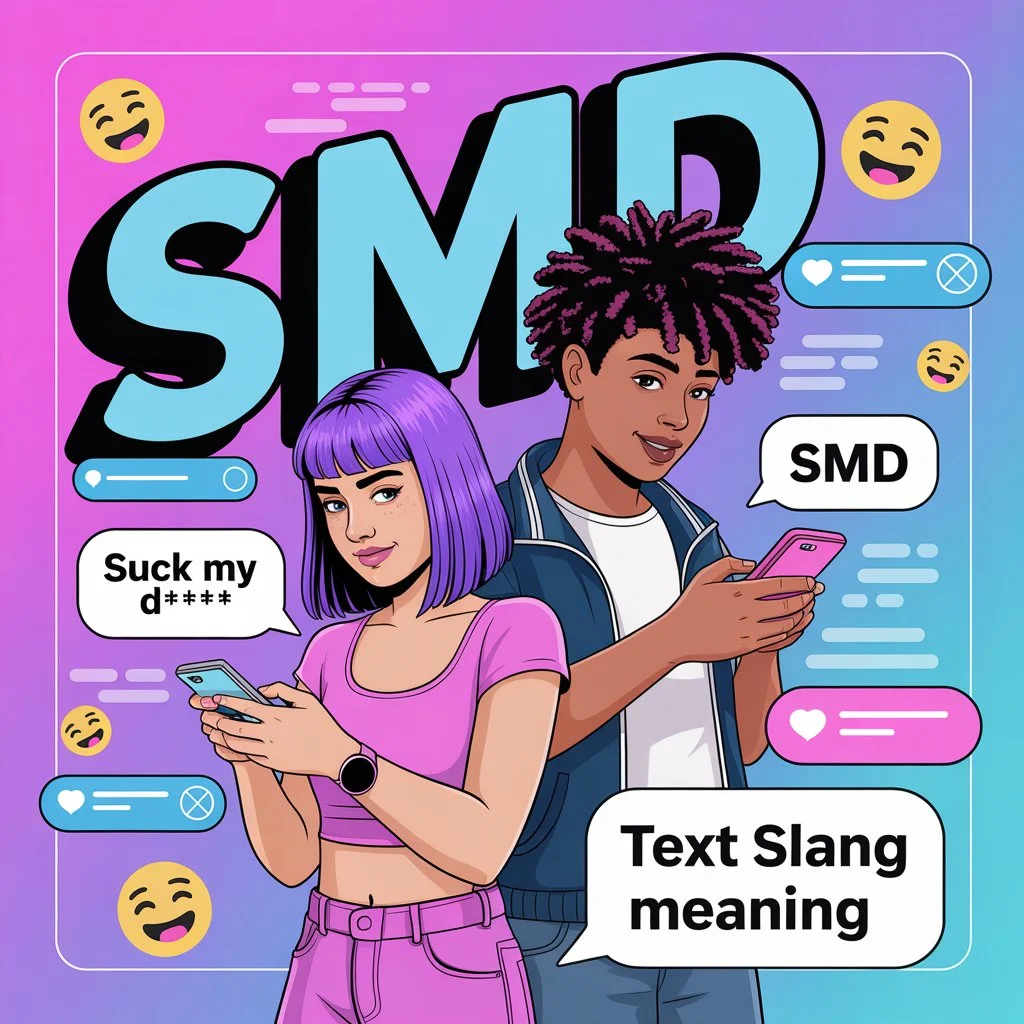
“SMD” in text slang most commonly stands for a vulgar phrase meaning “suck my d*,” used to express anger, disrespect, or defiance.** Some people search it thinking it’s harmless slang, but context matters—it can be offensive or misunderstood depending on the situation.
If you’ve seen “SMD” in a message or comment and felt unsure whether it was joking, aggressive, or something else—you’re not alone. This abbreviation carries strong emotional weight, and understanding it properly helps you avoid awkward or even uncomfortable situations.
SMD Meaning in Text Slang – Quick Meaning
“SMD” is an internet abbreviation with a primarily explicit and confrontational meaning.
Common meanings:
- Vulgar insult: “suck my d***” (most common usage)
- Expression of anger or defiance: used to push someone away
- Occasionally sarcastic or joking (rare): depends heavily on tone
Simple examples:
- “You think I care? smd.”
- “Stop texting me, smd.”
- “He said smd like I did something wrong??”
Even when used jokingly, the phrase still carries an edgy or aggressive tone.
Origin & Background
“SMD” didn’t appear overnight. It grew from street slang and hip-hop culture, where bold, confrontational language has long been used to express dominance, frustration, or attitude.
Cultural roots:
- Popularized through urban slang and music lyrics
- Reinforced by online gaming and competitive communities
- Spread widely via Twitter, TikTok, and meme culture
In earlier internet days, people used full phrases. Over time, they were shortened into abbreviations like “SMD” for speed and subtlety.
Evolution:
- Before: Direct explicit phrases
- Now: Abbreviated but still emotionally intense
Interestingly, while the letters make it look “lighter,” the meaning hasn’t softened much. If anything, the abbreviation sometimes makes it easier to use without thinking about its impact.
Real-Life Conversations
Here’s how “SMD” shows up in real conversations:
WhatsApp Chat
Person A: Why didn’t you reply all day?
Person B: I was busy
Person A: You’re always “busy” 🙄
Person B: smd
Instagram DMs
Person A: Your outfit is not it
Person B: okay fashion police
Person A: just saying
Person B: smd 😂
TikTok Comments
Person A: This video is trash
Person B: Then scroll??
Person A: smd
Text Messages
Person A: You owe me money
Person B: I’ll pay later
Person A: You said that last week
Person B: smd
These examples show how the tone can range from playful sarcasm to outright hostility.
Emotional & Psychological Meaning
“SMD” is rarely neutral. It’s emotionally charged.
What it expresses:
- Anger
- Frustration
- Rebellion
- Disrespect
- Sometimes humor (within close friendships)
Why people use it:
- To assert dominance in an argument
- To shut down a conversation quickly
- To mask vulnerability with aggression
In digital spaces, people often choose strong language because it feels powerful. But that power can come at a cost—misunderstanding, conflict, or damaged relationships.
Personal-style scenario:
I once saw a casual group chat turn tense because someone replied “SMD” jokingly. One person laughed, another went silent. That’s the risk—not everyone hears the same tone in the same words.
Usage in Different Contexts
Social Media
Common in comments and arguments. Often used impulsively.
Example:
“Don’t like it? smd.”
Friends & Relationships
Sometimes used jokingly—but only in very close circles where tone is understood.
Example:
“You ate my fries? smd 😂”
Work / Professional Settings
Never appropriate. It’s offensive and unprofessional.
Casual vs Serious Tone
- Casual: May be joking (risky)
- Serious: Almost always aggressive
Tone depends heavily on relationship and context.
When NOT to Use It
Avoid “SMD” in situations where respect matters:
- Professional or academic settings
- Conversations with strangers
- Sensitive or emotional discussions
- Cross-cultural communication
- Public platforms where tone can be misread
Using it casually can damage your image or escalate conflict quickly.
Common Misunderstandings
1. Thinking it’s harmless slang
It’s not. The meaning is explicit and potentially offensive.
2. Assuming it’s always a joke
Even with emojis, it can still feel aggressive.
3. Believing abbreviation softens it
Shortening the phrase doesn’t remove its impact.
4. Ignoring audience differences
What feels normal to one group may feel disrespectful to another.
Comparison Table
| Expression | Meaning | Tone | Usage |
|---|---|---|---|
| SMD | Vulgar insult | Aggressive | Arguments, conflicts |
| STFU | Shut up | Harsh | Confrontational |
| IDC | I don’t care | Dismissive | Casual/serious |
| JK | Just kidding | Light | Friendly |
| Chill | Calm down | Neutral | Soothing |
Key Insight
“SMD” stands apart because it carries explicit aggression, even when shortened. It’s not just slang—it’s a statement of emotional intensity.
Variations / Types
- smd 😂 – Attempts to soften tone with humor
- SMD bro – Adds casual familiarity
- smd fr – Emphasizes seriousness
- smd idc – Combines dismissal and aggression
- smd lol – Confusing mix of humor and insult
- smd pls – Rare, often sarcastic
- SMD rn – Expresses immediate frustration
- smd tbh – Honest but blunt tone
- smd nah – Rejecting something strongly
- smd bye – Ends conversation abruptly
Each variation changes tone slightly—but the core meaning stays strong.
How to Respond When Someone Uses It
Casual Replies
- “Okay, relax 😅”
- “That escalated quickly”
Funny Replies
- “Wow, such poetry”
- “10/10 communication skills”
Mature Replies
- “Let’s keep it respectful”
- “No need for that tone”
Respectful Replies
- “I’d prefer we talk calmly”
- “Let’s not go there”
Your response can either de-escalate or fuel the situation.
Regional & Cultural Usage
Western Culture
More commonly used, especially in online arguments or among younger audiences.
Asian Culture
Less accepted publicly due to stronger emphasis on respectful communication.
Middle Eastern Culture
Often considered highly inappropriate, especially in formal or mixed settings.
Global Internet Usage
Recognized widely, but not always used openly due to its explicit meaning.
Generational Differences
- Gen Z: More likely to use it casually or jokingly
- Millennials: More cautious, aware of its tone
Is It Safe for Kids?
Not really. “SMD” is based on an explicit phrase and isn’t appropriate for children.
While they may encounter it online, it’s important they understand its meaning and why it can be offensive or disrespectful.
FAQs
1. What does SMD mean in texting?
It usually stands for a vulgar phrase expressing anger or disrespect.
2. Is SMD always offensive?
Most of the time, yes—even when used jokingly.
3. Can SMD be used in a friendly way?
Only in very close friendships, and even then it’s risky.
4. Is SMD appropriate for social media?
It appears often, but it can harm your image.
5. What should I do if someone sends me SMD?
Stay calm and choose whether to ignore or respond respectfully.
6. Is SMD used worldwide?
Yes, but its acceptance varies by culture.
7. Why do people use SMD instead of full words?
To shorten typing and slightly mask explicit language.
8. Can SMD be misunderstood?
Yes, especially without tone or context.
9. Is SMD worse than other slang?
It’s more explicit than most common abbreviations.
10. Should I use SMD in conversations?
Only if you fully understand the context—and even then, caution is wise.
Conclusion
“SMD” is one of those slang terms that looks simple but carries heavy meaning. It reflects how modern communication blends speed, emotion, and cultural influence—but also how easily tone can be misread.
Used carelessly, it can create distance. Used knowingly, it becomes a tool of expression—but a sharp one.
The real skill isn’t just knowing what “SMD” means. It’s knowing when silence, humor, or respect might say more than any abbreviation ever could.