DPWM is one of those modern texting abbreviations that you might have seen floating around, but what exactly does it mean? It’s used in casual conversations and has a few different interpretations, depending on the context. If you’ve been scratching your head wondering about the meaning of DPWM, you’re not alone. Let’s break it down.
Quick Answer
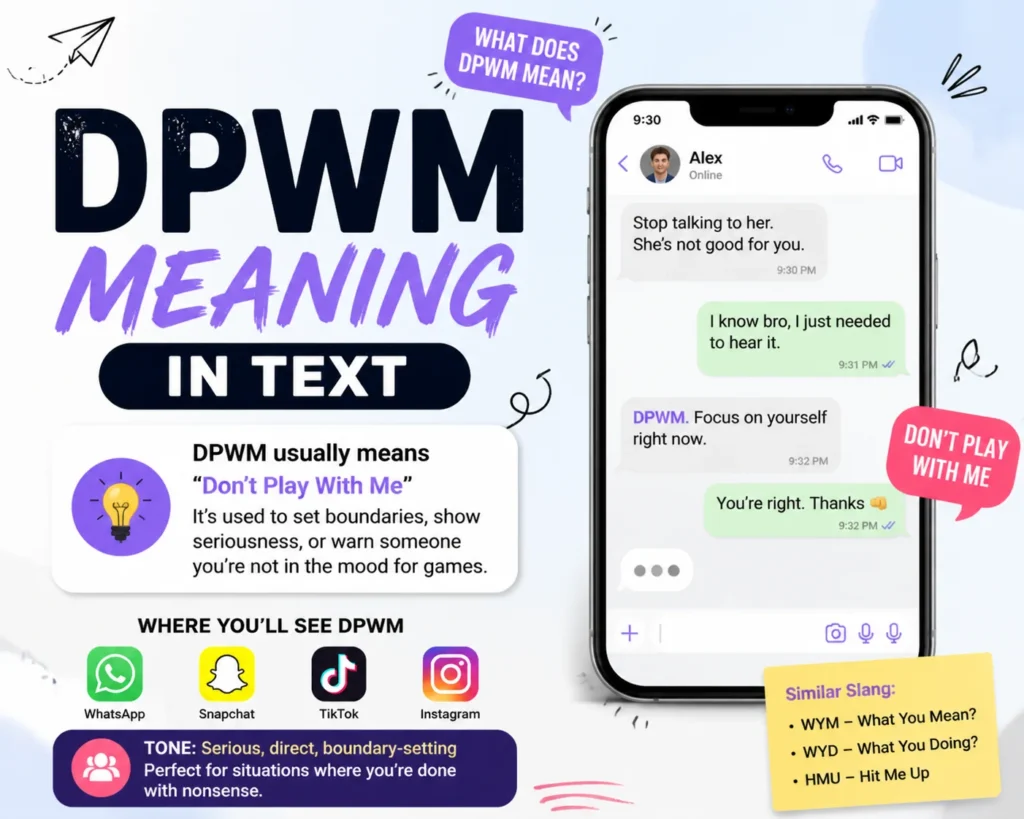
DPWM stands for “Don’t Play With Me” in most text conversations. It’s often used to express a playful or serious warning when someone is pushing boundaries or being cheeky. For example:
“DPWM, you know I’m not playing around!”
DPWM Meaning in Text
DPWM is a direct and straightforward abbreviation used in texting to convey a range of emotions from playful banter to a more serious warning. While its meaning can shift depending on tone, it’s mostly used when someone is testing your patience, pushing boundaries, or joking around in a way that could be perceived as too much.
This phrase can either be lighthearted or stern. It’s not as harsh as an outright command, but it still signals to the other person that they should tone it down or take things seriously.
When and Why It’s Used
DPWM is commonly used in informal settings, especially when you’re feeling slightly frustrated, playful, or teasing someone. You might use it in the following situations:
- Playful teasing: When a friend is being cheeky or pushing your buttons in a fun way.
- Serious warning: When someone is crossing a line and you want them to know you mean business, even though the tone remains light.
- Flirting or joking around: When you want to create a fun, teasing vibe with a hint of seriousness.
Examples of DPWM in Text
- “DPWM, I told you I’d beat you at this game!”
This is used playfully in a competitive scenario, showing you’re joking but serious at the same time. - “Don’t play with me, DPWM.”
Here, DPWM can express annoyance or a more serious warning, asking the other person to stop.
Real Chat Examples
Let’s dive into how DPWM shows up in actual conversations. These examples will help you understand the context better and give you a clear sense of how to use it.
WhatsApp Conversation
Friend:
“You think you can beat me at chess? I’ll win in the first few moves.”
You:
“DPWM, I’ve got some new strategies to show you!”
Instagram DM Conversation
Friend:
“I’ll get that joke, but you’re going to have to explain it to me again.”
You:
“DPWM, you already know the punchline. Just pay attention next time! 😜”
Text Message Conversation
You:
“Are you seriously trying to challenge me at this game? I’m way better!”
Friend:
“Don’t be so sure, I’m winning right now!”
You:
“DPWM, I’m coming back strong!”
Snapchat Conversation
You:
“You’ve been quiet. Are you avoiding me?”
Friend:
“No, just busy.”
You:
“DPWM, don’t act like I don’t know you’re ignoring me!”
Friend:
“Haha, okay, okay, you caught me.”
Emotional Meaning & Tone
The tone of DPWM can be playful or serious, and it all depends on how you intend it to come across. Here’s how the tone varies:
- Playful and teasing: When used with close friends or someone you feel comfortable joking with, DPWM can sound fun and lighthearted. It’s a way to add excitement to the conversation, especially when you’re engaged in friendly competition or banter.
- Warning and serious: In some situations, DPWM is used when you’re genuinely warning someone not to cross a line. It still has a casual tone, but there’s a sense of “I mean it” behind it. This can be seen in moments when you want to keep the conversation light but assert control.
- Flirty: DPWM can even be used in a flirtatious context. If you’re joking around with someone you like, it adds a playful tone to the interaction, hinting that you want more attention or interaction without being too direct.
DPWM Meaning from a Girl / Guy
From a Girl
When a girl uses DPWM, it’s often playful or teasing. She might be calling out a friend or someone she’s interested in, especially if they’ve been teasing her or acting in a cheeky way. It can also be a light warning when someone is testing her patience.
Example:
Girl: “Don’t even try to compete with me at trivia. DPWM, I’m the queen!”
Here, it’s playful, showing confidence.
From a Guy
Guys often use DPWM in a laid-back way, either teasing their friends or in a more serious manner to get someone to back off. It’s usually used in competitive situations or when someone is pushing their buttons.
Example:
Guy: “DPWM, you think you’re going to beat me at basketball?”
This shows a playful challenge, but it has a light seriousness behind it, signaling that the guy is confident he will win.
How to Reply to DPWM
Knowing how to reply when someone texts you DPWM depends on the situation and the relationship. Here are some common ways to respond:
Casual Replies
- “Haha, you wish!”
- “Let’s see if you can keep that attitude up.”
- “Oh, you’re on now!”
Friendly Replies
- “I’m not backing down!”
- “DPWM, I’m coming for that win.”
- “Bring it on, I’m ready.”
Funny Replies
- “You know I’m just playing, right?”
- “If you say so, but you’re going down!”
- “DPWM, you’ve been warned!”
Short Responses
- “I see how it is!”
- “Alright, alright!”
- “You got it!”
Is DPWM Rude or Safe to Use?
DPWM is not inherently rude. It’s safe to use in casual and informal conversations, especially with friends or people you feel comfortable joking with. However, it’s important to gauge the context and relationship. In a more formal or professional setting, DPWM would be inappropriate, as it could come across as too casual or even disrespectful.
- Safe to use: With close friends, in playful situations, or when joking around.
- Not safe to use: In formal conversations, professional settings, or with someone you don’t have a casual relationship with.
Always remember that tone is key. If you want to ensure DPWM doesn’t sound rude, use it with people who understand your humor or who you have a comfortable relationship with.
Where You’ll See DPWM
You’ll most commonly see DPWM in the following platforms and contexts:
- Texting: Among friends, family, or close acquaintances, especially in casual conversations or banter.
- Snapchat: Often used in playful exchanges or competitive challenges.
- TikTok: In comments or personal messages when someone’s showing off or teasing.
- Instagram: Typically used in DMs or comments to call out a joke, compliment, or competitive statement.
DPWM fits best in casual digital spaces where playful language is acceptable.
Similar Slang Comparison
| Slang | Meaning | Usage |
|---|---|---|
| WYD | What You Doing? | Asking someone what they’re up to |
| SUP | What’s Up? | Friendly greeting |
| HMU | Hit Me Up | Asking someone to get in touch |
| SMH | Shaking My Head | Showing disbelief or frustration |
👉 Key Insight: While DPWM shares similarities with other casual slang like WYD and SUP, it’s more specific in tone. It’s used to address someone who’s either teasing you or challenging you, and it carries a subtle warning or challenge.
Common Mistakes & Misunderstandings
- Tone Confusion: Since DPWM can sound playful or serious, it might be misunderstood if the tone isn’t clear. If you use DPWM in the wrong context, it might come across as too harsh or sarcastic, especially if the relationship is not close.
- Wrong Usage: DPWM is informal, so don’t use it in formal situations like work emails, professional settings, or with people who you don’t have a casual relationship with.
- Overuse: While DPWM is fun to use in the right context, using it too often can make it lose its charm or even sound like you’re always issuing a challenge.
FAQ Section
What does DPWM mean in Snapchat?
DPWM in Snapchat means “Don’t Play With Me.” It’s used when someone is teasing or joking around, and you want them to know you’re serious or challenging them back.
What does DPWM mean from a girl?
When a girl uses DPWM, it’s usually playful, showing that she’s teasing or challenging someone, but still in a friendly, lighthearted way.
Is DPWM rude?
DPWM is not rude when used in the right context. It’s playful, but it could come across as rude in a more serious or formal setting.
How should I reply to DPWM?
You can reply with a casual or funny response like “You wish!” or “Bring it on, I’m ready!”
When should I not use DPWM?
Avoid using DPWM in formal situations or when talking to someone you don’t know well. It’s best used in friendly, informal chats.
Conclusion
DPWM is a fun, versatile slang term that works great for casual, friendly exchanges, especially when you’re teasing or challenging someone in a playful way. It adds personality to a conversation, but always remember to use it in the right context to avoid sounding rude or dismissive.
Feel confident using DPWM with friends and people you’re comfortable with, but be cautious in formal settings. It’s all about knowing when and how to use it for maximum effect.